EAP 4.0 represents a new generation of Living Employee Assistance that adapts to each individual, their role, and life stage, making support more relevant and effective.
Workplace mental health has come a long way. Awareness has grown, investment has followed, and most organisations today offer some form of Employee Assistance Program. Eighty-seven per cent of corporate employees have access to mental health support at work.
Yet only 3% of employees use them when they are needed most.
This gap indicates that traditional employee assistance does not align with how people live and work. Kyan Health was created to address this issue. With the launch of EAP 4.0, the Living EAP, we offer a meaningful solution.
Kyan Health | The last EAP ever needed
A Category That Has Been Ready for a Leap Forward
To understand what sets EAP 4.0 apart, it helps to trace the evolution of Employee Assistance Programs.
The first EAPs, introduced in the 1970s, were primarily hotline services offering limited referral sessions during crises. They served an important purpose and continue to do so for many employees. Access was restricted, support was time-limited, and the model focused on acute needs rather than ongoing wellbeing.
In the 2000s, digital solutions expanded what was possible: self-guided apps, online content libraries, and eventually video counselling brought care to employees on their own terms and at their own pace. Usage increased modestly, and the definition of EAP services widened considerably.
By the 2010s, a third generation had taken shape — one that added coaching marketplaces, richer analytics, and a growing focus on outcomes over activity. Providers started asking not just “how many sessions were used?” but “did people get better?” That shift mattered.
EAP 4.0 advances this evolution. While earlier generations improved access and range, the Living EAP prioritises relevance by meeting every employee in any role or life stage with support tailored to their needs.
The scale of the need is significant. Fifty workdays per employee per year are lost to mental health challenges across enterprise organisations. Stress and depression-related work incapacity have been rising for over a decade. Mental health-related costs run to approximately $3,000 per employee annually. The case for a more effective employee assistance programme has never been stronger.
What “Living” Actually Means
The name matters, so it is worth being precise.
A living EAP moves with the employee rather than waiting for them to come to it. It adapts to their role, workload patterns, current life circumstances, and history with the programme — so that over time, the experience becomes more relevant, not less.
For a nurse returning from compassionate leave, the Living EAP provides a different experience than it does for a software engineer managing a high-pressure product launch. Similarly, a new parent balancing childcare and work receives tailored support. The platform remains consistent, but the experience is fully personalised.
This high level of personalisation drives Kyan’s engagement rates of 10% to 40%, compared to 1% to 3% for most traditional employee assistance programmes. For details on EAP utilisation calculation and benchmarks, see our guide: What Is EAP Utilisation Rate? A Complete Guide to Calculation and Interpretation.
How the Living EAP Works: Three Core Capabilities
The Smart Triage Engine: Where AI Meets Human Care
At the core of EAP 4.0 is the Smart Triage Engine, powered by KAI, Kyan Health’s AI companion. It is important to clarify what this means for HR and HSE leaders who may be cautious about AI-first solutions.
KAI is not the destination. It is the navigator. It analyses clinical assessments, mood signals, distress indicators, and real-time engagement patterns to match each employee to the right level of support — and when that support needs to be human, it gets there fast. No separate referral process, no new login, no friction. The handoff to a verified psychologist or coach happens within the same experience, with a first appointment guaranteed within three working days, anywhere in the world.
This approach ensures the engine is clinically meaningful, not just technically advanced. It is built on evidence-based content, operates within a GDPR-compliant framework, and includes embedded crisis escalation pathways. Every distress signal leads to a clear care pathway.
The role awareness built into the engine matters here, too. A warehouse operator describing physical exhaustion from shift work receives a different response than a financial analyst navigating deadline-driven pressure — because the cognitive and physical demands of those roles are genuinely different, and the support should reflect that.
The result is a system that feels individual at scale. Over 96% of Kyan users engage with AI-tailored support on the platform, and more than 90% report that their wellbeing goals are meaningfully achieved within the programme.
Guaranteed Access to World-Class Human Care
Personalised digital support works best when it is backed by equally strong human care. Kyan maintains a verified global network of more than 140,000 licensed counsellors and coaches, available in over 70 languages, with a first appointment guaranteed within three working days, anywhere in the world.
The network operates in two tiers. Approximately 1,000 contracted, clinically vetted providers are available for direct, instant booking through the platform. A further 139,000 verified counsellors provide coverage across geographies and specialisms, including remote and rural locations that are often underserved by traditional employee assistance programme providers.
For global organisations, the same standard of care is delivered with genuine cultural and linguistic fluency across every country where employees live and work. There are no waitlists for eligible employees, and the quality of support does not diminish as the programme scales.
Visibility That Supports Confident Programme Management
Knowing that a programme is working and being able to demonstrate it are among the clearest requests we hear from HR leaders and benefits professionals. Kyan Engage, the programme management layer of the Living EAP, is designed to make that straightforward.
It provides real-time visibility into adoption, care activity, and well-being trends across five evidence-based dimensions: psychological safety, energy and vitality, social belonging, resilience capacity, and purpose and meaning. All insights are anonymised and aggregated; individual confidentiality is absolute. Employers see patterns and trends; they never see individuals.
The outcomes are measurable: 72% of users report improved well-being, and 91% of programme managers use the dashboard every week. The Living EAP delivers an average ROI of 8x across 150+ global customers, tied to reduced sick leave, lower voluntary attrition, and decreased healthcare spend. To understand what that looks like in practice, read: The Absence That Never Happened: What Effective EAP Support Looks Like in Practice.
Built for Every Kind of Worker
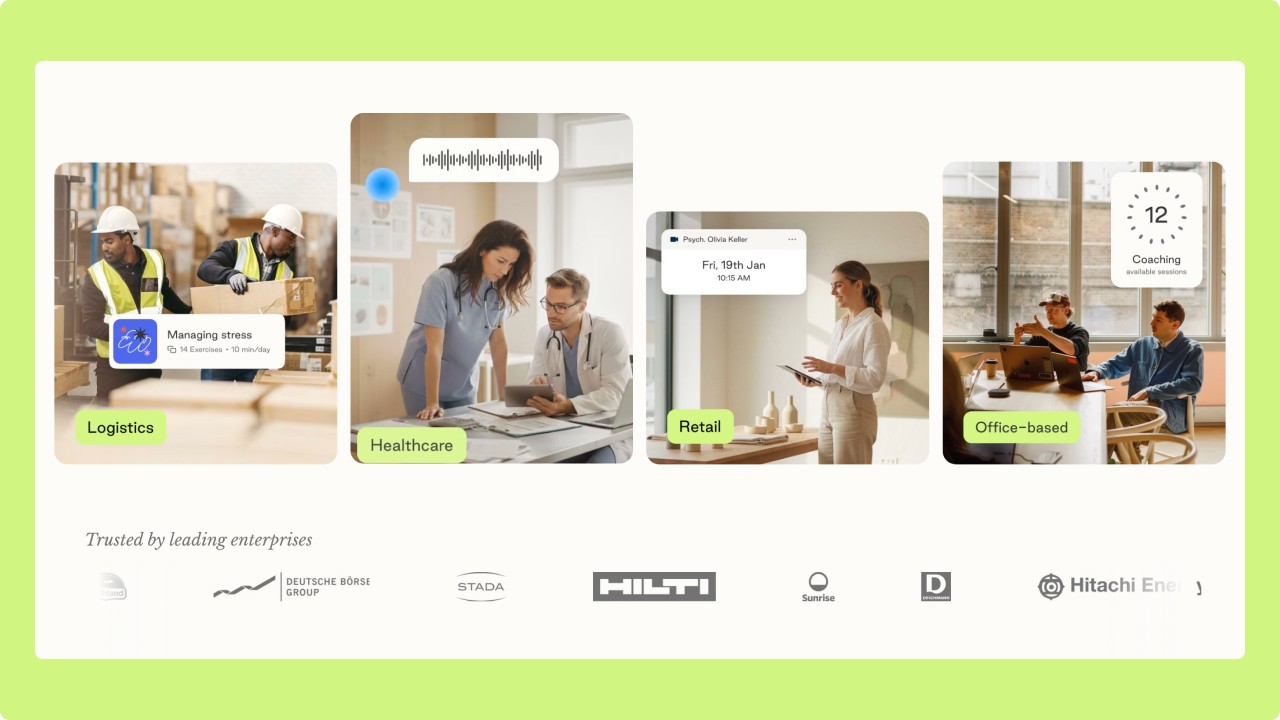
A defining strength of EAP 4.0 is its deliberate design to serve the full breadth of a modern workforce, not only knowledge workers in corporate offices.
Frontline healthcare workers have genuinely different needs from public sector managers. Factory floor operators face distinct stressors compared to financial analysts. Engineers on 24-hour incident response cycles require support different from that of marketing managers preparing for a product launch.
The Living EAP adapts to all of them. Check-ins are role-aware and adjust to shift patterns, workload intensity, and emotional context. Kai recognises the specific pressures that come with different kinds of work. Human specialists are matched based on contextual fit and availability. Outcomes are tracked and measured against the realities of each person’s working life.
The Full Platform: Care, Engagement, and Learning in One Place
Kyan’s Living EAP brings together three integrated layers that function as a unified platform rather than a collection of separate tools.
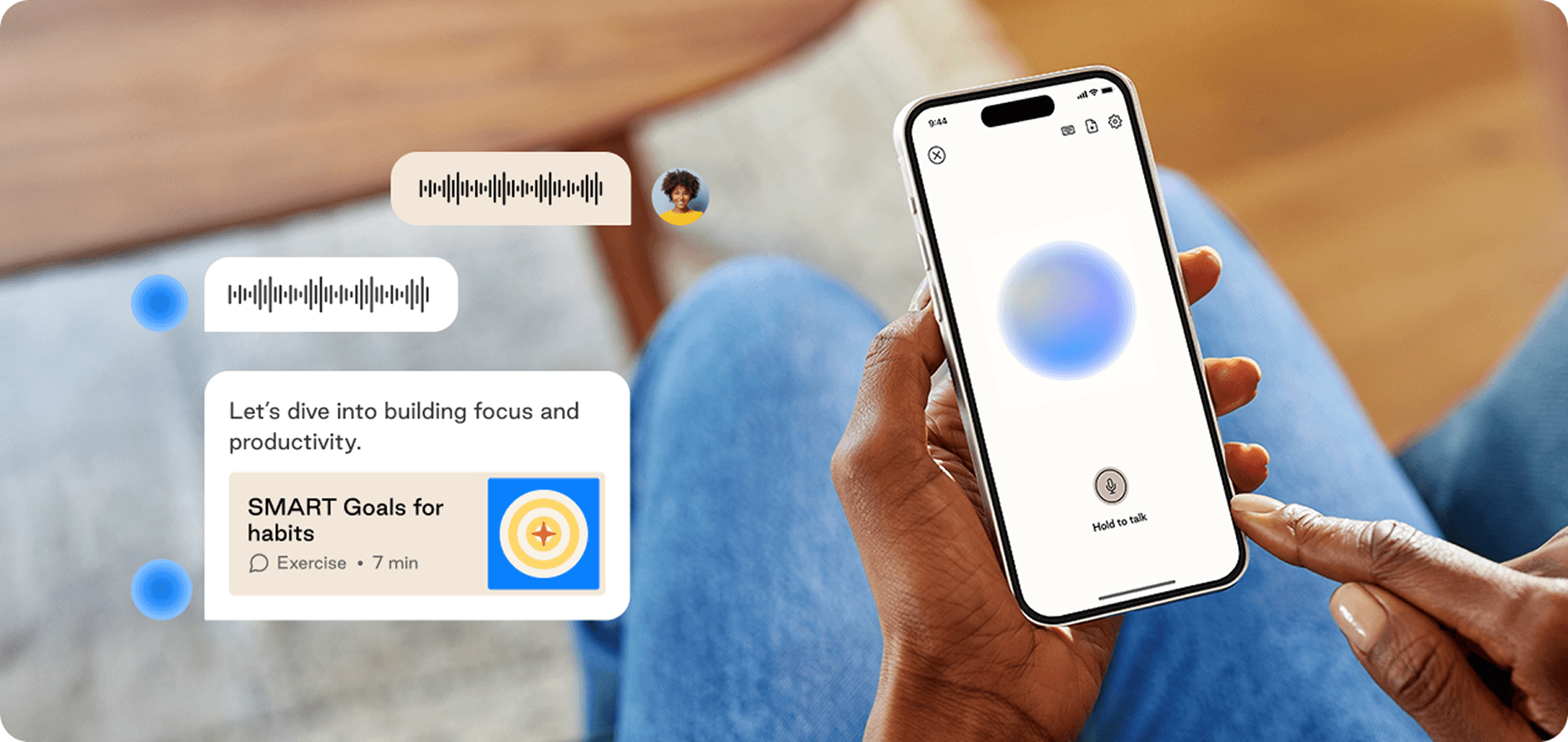
Kyan Care+ is the employee-facing layer: Kai’s AI-powered guidance, direct booking to licensed psychologists and coaches, 1,000+ hours of multilingual self-care content, work-life services including legal, financial, eldercare and childcare support, and a 24/7 emergency helpline.
It covers the full spectrum of EAP services, from everyday resilience to acute support, within a single, confidential experience.
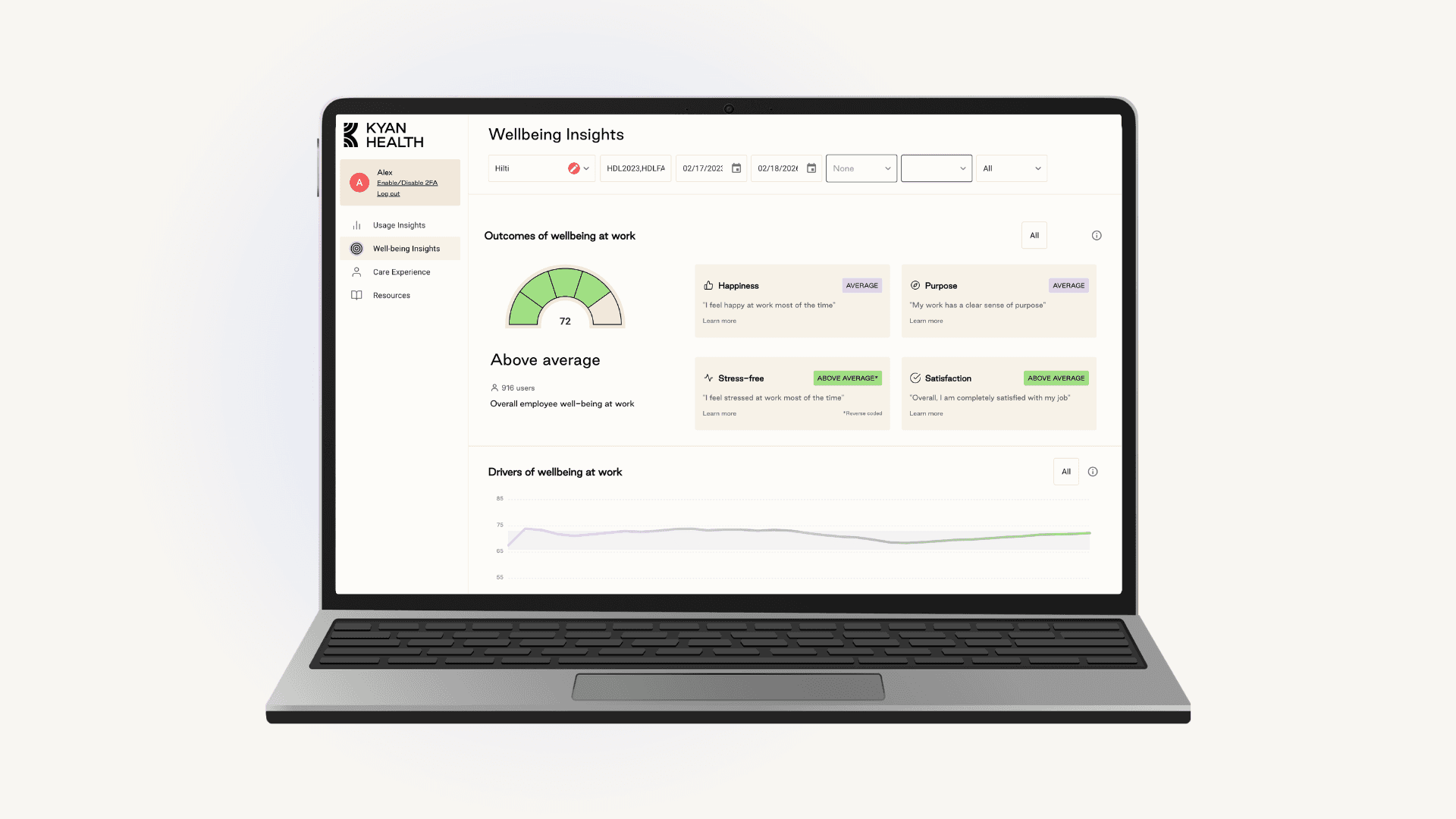
Kyan Engage+ is the programme management layer: real-time wellbeing insights, care and usage analytics, role-based dashboards, an AI-powered EAP Launch Hub, and communication tools to sustain engagement well beyond launch day. Programmes that previously required months to deploy can now be live in days.
Kyan Academy+ is the learning layer: AI-led masterclasses, more than 100 hours of evidence-based training programmes, leadership development through Cultivating Caring Leadership, and self-paced e-learning across all five wellbeing dimensions. It builds mental health capability as a durable asset within the organisation over time.
Together, these three layers address the challenges that matter most to organisations evaluating their EAP options: low engagement and awareness, difficulty measuring ROI, fragmented vendor relationships, and the administrative complexity of running a global programme.
What This Means for Each Stakeholder
The Living EAP was designed with every internal stakeholder in mind, not only the employees who will use it.
For HR and People leaders, Kyan makes it straightforward to demonstrate programme impact, with clear links between EAP engagement and measurable outcomes, including absence rates, attrition, and healthcare spend. With Kyan Engage, the data needed to make that case internally is always at hand.
For HSE and occupational health teams, the Living EAP provides earlier signal detection of psychosocial risk, faster escalation pathways, and the documented, audit-ready oversight that ISO 45003 compliance and evolving workplace safety regulations increasingly require. It supports both the spirit and the letter of the duty of care.
Ready to see it in action? Whether you are evaluating employee assistance programme providers, benchmarking your current EAP against modern alternatives, or simply exploring what is possible today, we would welcome the conversation.
The Living EAP is designed to work for your whole organisation — every employee, every country, every life moment.
Talk to the team →
Frequently Asked Questions
Is Kai the same as using a general AI tool like ChatGPT?
Kai is purpose-built for the enterprise wellbeing context in ways that matter deeply. It operates on clinically reviewed, evidence-based content, with structured safety protocols and built-in crisis escalation.
When an employee needs human support, Kai routes them there directly — within the same experience. It is fully GDPR-ready and operates within your organisation’s governance framework, making it a fundamentally different proposition from a general-purpose conversational AI.How does Kyan protect employee confidentiality?
Confidentiality is foundational to any employee assistance programme that people will actually use. Kyan is built with privacy at its core — employees engage knowing their data is never visible to their employer, by design. For a detailed look at what employers can and cannot see, read: EAP Privacy in 2026: What Global Employers Can Actually See. For full details on our security architecture, certifications, and compliance standards, visit trust.kyanhealth.comHow is the Living EAP different from a traditional employee assistance programme?
Traditional employee assistance programmes were built around reactive, on-request access — available when employees seek help, but not designed to reach them before a problem escalates.
The Living EAP adapts continuously to each person’s role, circumstances, and life stage, making support relevant in everyday moments as well as in moments of crisis. That shift in design is what drives the difference in engagement.
Share this post

Barbra Okafor
Content and Growth Marketing Manager